From Street Food to Royal Recognition
Pizza, as we know it today, took shape in late 18th‑century
Naples,
when tomatoes arriving from the Americas transformed Italian cuisine.
Originally a humble street food for the working poor, pizza evolved throughout the 1800s from simple sustenance into an art form
worthy of royal attention and, much later, into the UNESCO‑recognized craft celebrated today.
If you want to taste this history in Prague, visit
Papaiolo, our Italian restaurant in Prague.
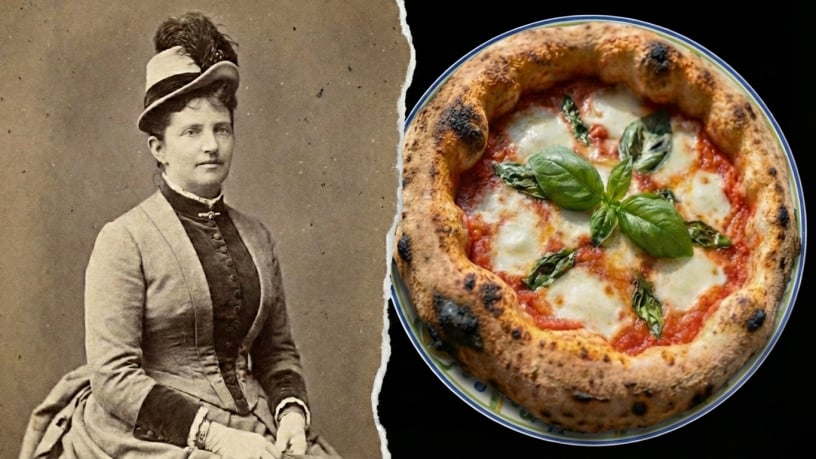
The Legend of Pizza Margherita
In June 1889, Queen Margherita of Savoy visited Naples and requested authentic Neapolitan fare instead of French cuisine.
Raffaele Esposito of Pizzeria Brandi prepared three pizzas, with the Queen favoring one topped with fresh mozzarella, tomato, and basil –
colours deliberately arranged to mirror the Italian flag: red, white, and green.
Esposito honored the moment by naming it
Pizza Margherita.
A letter documenting the Queen's approval hangs in Pizzeria Brandi to this day.
While historians debate whether these exact toppings existed earlier, Pizza Margherita crystallized the perfect balance of simplicity and elegance that defines
authentic Neapolitan pizza.
The Neapolitan Standard and UNESCO Recognition
In 2017, UNESCO recognized the craft of the
Neapolitan pizzaiuolo as Intangible Cultural Heritage of Humanity.
This recognition sits alongside the 2025 decision to recognize
Italian cuisine as a whole,
and confirms just how central pizza is to Italian cultural identity.
Authentic Neapolitan pizza requires specific elements:
dough fermented 24–48 hours using only flour, water, salt, and yeast (no oil);
hand‑stretching to roughly 3 mm thickness at the center;
a traditional wood‑fired dome oven heated to 450 °C or more;
and minimal, high‑quality toppings.
The extreme heat bakes the pizza in just 50–90 seconds, creating the signature soft, pillowy interior with a lightly charred
cornicione (edge).
Papaiolo's Commitment to the Craft
At
Papaiolo in Prague,
we honor this UNESCO‑recognized heritage through every choice:
our wood‑fired oven running at 450 °C+,
24–48 hour dough fermentation inspired by
Vera Pizza Napoletana standards,
and first‑quality ingredients such as San Marzano tomatoes, fresh mozzarella from a local latteria, and fragrant basil.
Our pizzaioli understand that they are not just following a recipe, they are transmitting a living tradition.
If you would like to explore the broader cultural context, read also our article about
Italian cuisine being recognized by UNESCO
or discover our story in
Welcome to Papaiolo – Home of Authentic Neapolitan Pizza.
Buon appetito. 🍕
Further reading on the history of Pizza Margherita and Neapolitan pizza:
Wikipedia (2005). “Pizza Margherita.”
Atlas Obscura (2020). “Birthplace of the Pizza Margherita Plaque.”
Wikipedia (2009). “Neapolitan pizza.”
History Hit (2022). “Food Fit for a Queen: The Invention of the Margherita Pizza.”